
Representing Appetite for Angus on the recent Scotland Food & Drink learning journey to Northern Ireland was an eye-opening experience. More than just a tour of excellent food and drink spots, it provided a vital benchmark for our own regional goals. It showcased a food landscape that, in many ways, perfectly mirrors our own here in Angus—offering direct inspiration for how we can better connect our producers, hospitality leaders, and consumers.
The Urban-Rural Mirror: Feeding the City, Sourcing the Suburbs
One of the most striking takeaways from the trip was just how closely the geographical and market dynamics of Northern Ireland align with our setup in Angus. In NI, you have a major urban economic engine—Belfast—acting as the primary commercial and tourism gateway, while an incredible array of artisan food and drink producers are scattered across a heavily agricultural rural landscape just beyond its borders.
This layout perfectly mirrors our relationship with Dundee. Angus is a highly productive, rural food powerhouse serviced by a larger city right on its doorstep. Our long-term success relies heavily on building a seamless, two-way relationship: a framework where the rural region feeds the city, and the city enthusiastically champions and showcases the region.
In Belfast, we saw this urban-rural collaboration executed flawlessly. Exceptional inner-city retailers like Sawers Grocers act as curation gateways for the countryside. By prominently stocking regional staples like Armagh Apple Black Butter and Ewings salmon, they instantly bridge the gap between Northern Ireland’s 70% agricultural land and the foodie-curious urban consumer, proud locals, and city visitors. This is exactly the type of intentional, high-visibility connection we can strengthen between Angus fields and Dundee’s vibrant retail and hospitality scene.
The Golden Rule of Agritourism: > “Your ordinary is their extraordinary.” – Jamesy the Shepherd, Glenshane Country Farm. We often undervalue the daily rhythm, heritage, and simple operations of our rural businesses, but that raw, authentic process is exactly what modern visitors are hungry to experience.
Key Learnings for the Angus Food & Drink Network
The core focus of the tour was exploring how a region can leverage authentic, “place-based” marketing and powerful storytelling to drive meaningful economic growth. As we plan the next steps for Appetite for Angus, three major themes stood out:
- Authentic Community Over Trophies In both hospitality and production, the most resilient businesses we visited focused on day-to-day excellence and true community rather than chasing endless accolades. Chef Niall McKenna of Watermans Supper Club shared a beautifully pragmatic view on awards: focus relentlessly on “what keeps the doors open” (your core local clientele) rather than the massive distraction of chasing accolades. Similarly, Dart Mountain Cheese made a deliberate decision to stop applying for “diluted” awards to focus entirely on strengthening local supply chains and regional networks. Collaboration, it turns out, is far more powerful than individual trophies.
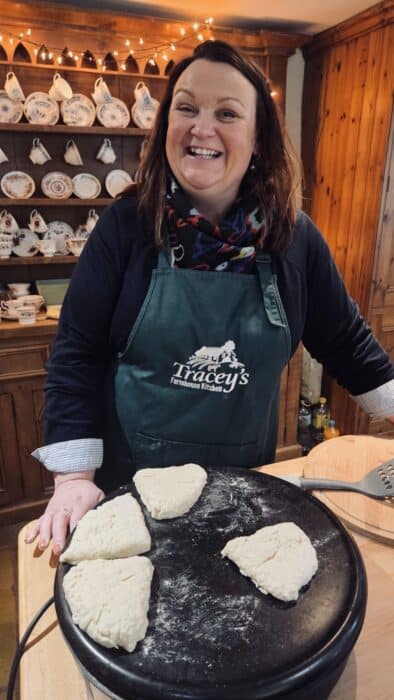
- The Gold Standard of Immersive Hospitality The standout highlights of the trip occurred when we were invited directly into the heart of a business. At Tracey’s Farmhouse Kitchen on the shores of Strangford Lough, visitors are brought into a traditional thatched cottage to make soda bread firsthand. This creates a powerful “sense of place” that is far more impactful than any generic, polished tourist attraction. It felt entirely unmanufactured, human, and deeply rooted in local provenance.
- Protecting the Experience Through Innovation We witnessed outstanding bravery when it came to business diversification. Friels of Swatragh has successfully blended a deeply traditional, historic pub with a cutting-edge VR experience and a converted family-home museum detailing local history. They didn’t compromise their heritage; instead, they protected the core experience while using modern technology, motorhome sites, and holiday accommodation to maximise visitor stay and spend.
The Immediate Opportunities to Grow and Monetise Angus
So, how do we translate these Northern Irish lessons into direct results for our members? Our biggest immediate opportunity lies in monetising our existing assets.
In Angus, we have already established brilliant thematic trails—specifically our Smokie, Berry, and Spirit trails. However, we haven’t yet fully converted these regional assets into bookable, commercially viable experiences for the travel trade, albeit elements of these trails are bookable. Insights from operators like Taste & Tour Belfast gave us highly practical ideas on how to successfully diversify trails into premium, bookable itineraries. Crucially, they revealed that the vast majority of their food tour revenue actually comes from local tourism. This is a massive, highly sustainable market we need to explore more deeply right here at home.
Furthermore, we can implement incredibly simple, low-cost steps to celebrate our provenance tomorrow. The Hastings Grand Central Hotel features a beautifully designed booklet called the Hastings Book of Breakfast on every table. It explicitly details the provenance and tells the story behind every single local item on the menu. It is a lovely, simple touch that our local Angus hotels, B&Bs, and cafes could easily adopt to champion our nearby producers, and A4A can support on this.
Moving Forward Bravely: “Full Duck or No Dinner”
If there is one overarching business philosophy we brought back to Scotland, it is the mindset of being “Full Duck or No Dinner”—a local reminder to be brave in our investments, seize funding opportunities, and invest heavily in distinct branding. As Jamesy the Shepherd rightly noted, we must never “bend and shape” our offerings to fit into generic boxes or cater to everyone else—we need to fiercely protect our unique regional experiences, our heritage, and our pricing structure.
From our historic Arbroath Smokehouses to our world-class soft fruits and craft spirits, Angus has an extraordinary heritage story to tell. By leaning into authentic, human connections and building tighter commercial networks between our rural producers and urban hospitality hubs, we can turn our everyday processes into extraordinary visitor journeys. Let’s get to work